Contact Us

Use the form on the right to contact us.

You can edit the text in this area, and change where the contact form on the right submits to, by entering edit mode using the modes on the bottom right. 


123 Street Avenue, City Town, 99999

(123) 555-6789

email@address.com


You can set your address, phone number, email and site description in the settings tab.
Link to read me page with more information.

1518673_10151899404966243_198835309_o.jpg

Blogging Towards Equity

A forum to share information relevant to the education of linguistically and culturally diverse students and their teachers. 


THE COLLEGE OF EDUCATION AND BOBCAT BOUNTY PARTNER TO FIGHT FOOD INSECURITY AT TXST

Maneka Brooks

Early this year, I collaborated with the on-campus food bank (Bobcat Bounty) to expand to both sides of the college of education. It was written about by the Texas State News service. I copied the text below and have included the link here: https://www.education.txst.edu/newsroom/coe-bobcat-bounty

Charlcee Cervantez I February 10, 2023

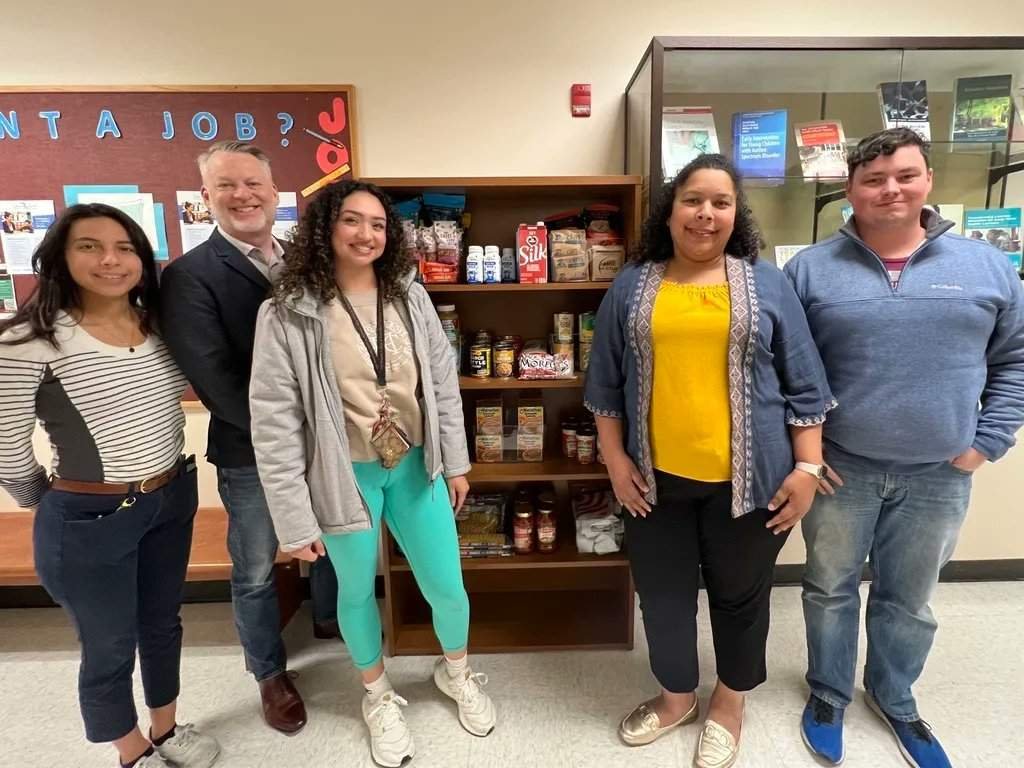
COE Faculty, Staff and Students in front of cupboard

The College of Education has teamed up with Bobcat Bounty to help fight food insecurities across campus by opening two new free food cupboards for the Bobcat Community.

Bobcat Bounty is the first student-run, the on-campus food pantry at Texas State University. It is run by students under the direction of faculty from the Food Security Learning Community in the Nutrition & Foods Program.

Previously, only one food cupboard was available to students on the west side of campus in the Family and Consumer Science Building. Now, with the help of the College of Education, two new locations will be available for students.

There is now a cupboard in Jowers Center located in the first-floor student lounge. There is also a cupboard on the third floor of the Education Building near the elevators. These cupboards are open to all students, faculty, staff, and the Bobcat community. Individuals can select the foods they need without charge and at their convenience.

This expansion is an effort to provide easier access to individuals that may be facing food insecurities. Readily available resources like this help improve the college experience, especially for students. These cupboards will be replenished weekly, allowing for fresh food to be put on the shelves.

Need help finding Jowers Center or the Education Building? Check out this map!

Supporting Long-term English Learners Virtually

Maneka Brooks

Last year, I participated in the #VirtuEL20 which is a free conference that focuses on students who are identified as English learners or emergent bilinguals. My presentation focused on how educators could support students who are considered to be long-term English leaners during remote instruction. This presentation took place in the form of a conversation with Dr. Katie Toppel and has lots of research-based and ready-to-implement strategies. I have included the link to the video here: Supporting Long-Term English Learners Virtually.

New Book: Literacy Teaching and Long-Term English Learners

Maneka Brooks

I am excited that a book that I have been working on is finally available in digital and print form! I keep reading the title over and over again:

Transforming Literacy Education for Long-Term English Learners: Recognizing Brilliance in the Undervalued

More important than the title, one of the things that I find to be most special about this book is that it combines theory and practice in a way that uplifts students identified as LTELs. Here is an excerpt from the book jacket that captures the essence of the book:

“Grounded in research on bilingualism and adolescent literacy, this volume provides a much-needed insight into the day-to-day needs of students who are identified as long-term English language learners (LTELs). LTELs are adolescents who are primarily or solely educated in the U.S. and yet remain identified as "learning English" in secondary school. Challenging the deficit perspective that is often applied to their experiences of language learning, Brooks counters incorrect characterizations of LTELs and sheds light on students’ strengths to argue that effective literacy education requires looking beyond policy classifications that are often used to guide educational decisions for this population.”

You can purchase this book from Routledge or Amazon. Let me know what you think about it!


Response: Ways to Build Speaking Skills With ELLs

Maneka Brooks

Recently, I contributed to a post that was published on Classroom Q & A with Larry Ferlazzo. The five different respondents shared their tips for creating a classroom environment in which students have opportunities to speak. It is an important topic because communication is fundamental to language learning.

Below, I include my contribution in which I talk about the importance of teachers’ understanding students’ experiences of race and racism for language teaching. Importantly, I give tips about what this understanding looks like in classroom practice.


“I don’t speak English fluently, but I understand it and I know how to speak and write it…not the best. But, they [teachers] think that just because we look like Mexicans that they need to keep repeating, repeating, repeating…like the ones who learn Spanish first they don’t think we are going to understand it and they keep us like away from the other ones that know English.”

-Francisco, a high school student

After Francisco (a pseudonym) shared these thoughts, I was surprised. His comment surprised me because over the three months that I had observed him in his high school English language arts class he rarely said a word. He spoke so little that because of his English language learner (ELL) classification, I was unclear as to how much he could communicate in English.

Towards the end of our interview, I shared my initial assumptions about his English abilities with Francisco. He responded by recounting experiences of teachers assuming that he could not speak English because he sat near students who (unlike him) were recent immigrants from Latin America. He shared his frustration with being spoken to by White English-speaking teachers in broken Spanish because they assumed that he did not know English. Moreover, he understood White teachers’ disrespect towards those they perceived as Latino immigrant students as emblematic of racial dynamics that he witnessed outside of school. His decision to remain silent during class was a way to ensure that his intellectual and linguistic dignity would be protected.

My conversation with Francisco situates my response to this week’s question within the importance of perceptions about race in English language teaching. I highlight two areas of learning that are fundamental to educators setting the groundwork for students, like Francisco, to believe that their contributions are important in the classroom.

1.     Learn about the linguistic and educational experiences of ELLs in your classroom.

Francisco shared how educators’ assumptions about his English proficiency contributed to his silence within the classroom. Create opportunities for students to share about their educational and linguistic experiences to allow educators to avoid these types of mistakes. Importantly, this does not mean asking students to respond to direct questions about these topics in front of the entire class. This type of information can be integrated into “getting-to-know-you” projects like linguistic autobiographies, linguistic surveys, identity collages, and other such classroom activities.

2.     Learn about the racial histories of the United States and the countries with which your students have connections.

As Francisco’s comments illustrate, students come into the classroom with histories of being treated certain ways because of their racial identities. Educating ELLs, most of whom also belong to minoritized racial groups, requires recognizing the impact of racism inside and outside of the classroom. Educators who understand how race and racism operates can make informed decisions about how to best incorporate students’ identities into instruction, avoid racist practices within their classroom, and can advocate on behalf of their students. While learning about these topics through reputable external resources (e.g., documentaries, articles, etc.) is necessary, students can also teach educators through sharing their own experiences. For example, teachers can design activities in which students talk about resilience within their communities.

Students who are identified as ELLs (like all other students) are multifaceted individuals. As a result, the racial dynamics that impact the rest of society also impacts their learning. If educators want to create spaces for ELLs to use their voices, it is necessary to create classroom environments where students understand that all of their identities are valued.


Thanks to Larry Ferlazzo for providing a venue to share these ideas. Don’t forget to check out his website that has a plethora of other resources: http://larryferlazzo.edublogs.org/